

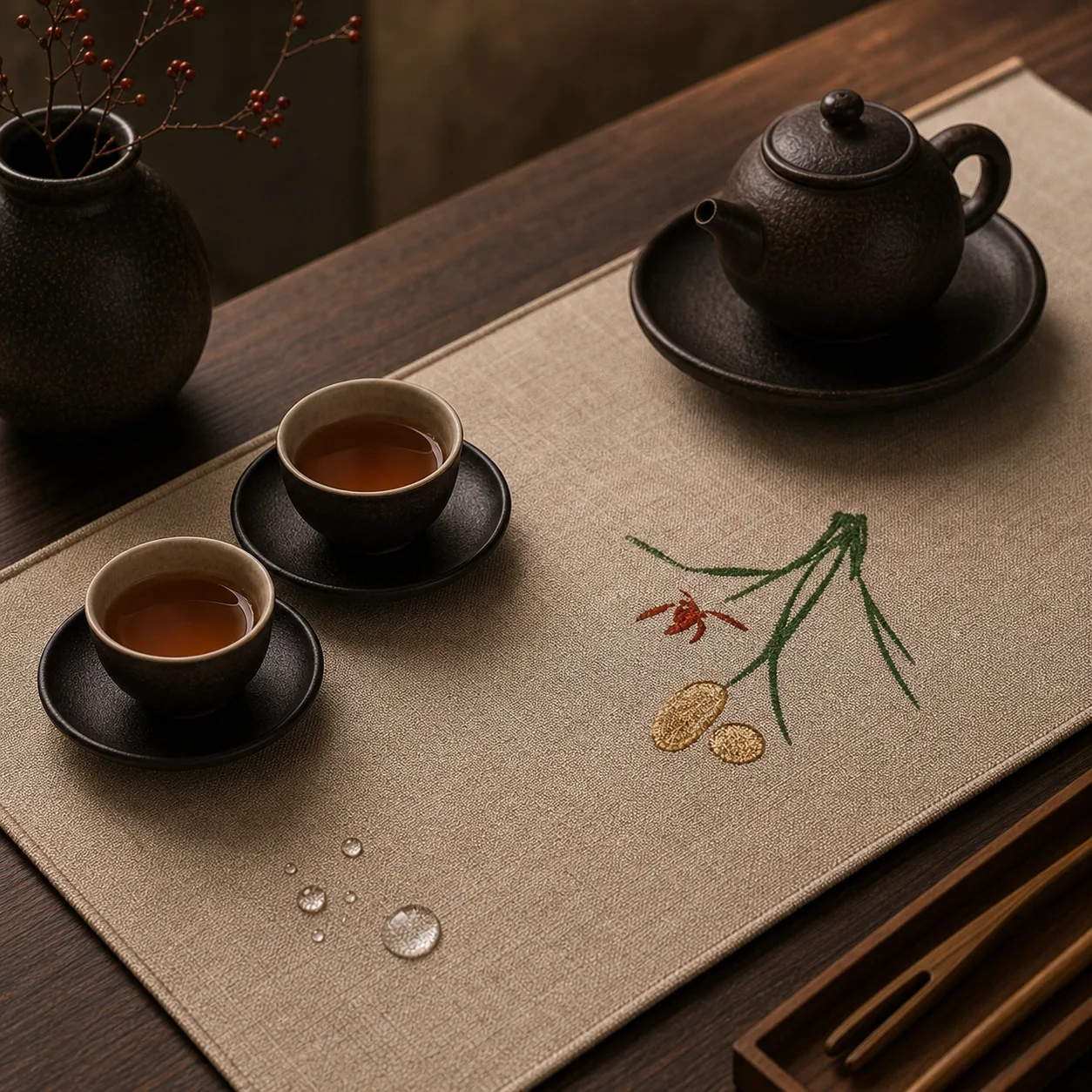
Every tea table has one. Most people never think about it.
The tea cloth — sometimes called a tea towel or cha jin — sits folded at the edge of the tray, absorbing drips, wiping rims, and quietly keeping the session clean. It is the most used object on the table and, almost always, the least considered.
This is a guide to understanding what the tea cloth actually does, why it matters more than most people realize, and how to choose one that works with your practice.
What the Tea Cloth Actually Does
In a gongfu tea session, water moves constantly. You rinse the teapot. You warm the cups. You pour over the lid. You wipe the base of the fairness cup before it touches the tray. Each of these moments produces a small amount of water that needs to go somewhere.
The tea cloth handles all of it. A good cloth absorbs quickly, releases moisture evenly, and dries fast enough to be ready for the next use. A poor cloth — too thin, too synthetic, too loosely woven — leaves water sitting on the tray and makes the session feel messy and unresolved.
Beyond function, the cloth also shapes the visual rhythm of the table. A cloth that is folded neatly and placed with intention signals that the session has been thought through. It is a small thing, but small things accumulate.
Natural Fibers vs Synthetic
The material of a tea cloth determines almost everything about how it performs.
Natural fibers — linen, cotton, hemp — absorb water immediately and release it as they dry. They soften with washing and develop a texture that feels right in the hand. Over time, a well-used linen cloth becomes one of the most comfortable objects on the table.
Synthetic fibers absorb less and dry faster, but they can feel slick and tend to push water around rather than absorbing it. For a practice that values texture and presence, synthetic cloths rarely feel appropriate.
At MR.TEA, our tea cloths are made from natural textile — selected for weight, weave, and the way they sit on the tray without bunching or sliding.
How to Fold and Place the Tea Cloth
There is no single correct way to fold a tea cloth, but a few principles apply across most traditions.
The cloth should be folded so that a clean edge is always accessible — you want to be able to wipe a cup rim without unfolding the entire cloth. A simple thirds fold, with the open edge facing away from you, works well for most sessions.
Placement matters too. The cloth typically sits to the right of the tray, within easy reach of the pouring hand. Some practitioners place it beneath the teapot when it is not in use, using it as a small rest that absorbs any drips from the base.
Caring for Your Tea Cloth
Wash the cloth regularly — after every few sessions, or whenever it begins to hold the smell of tea. Natural fibers respond well to cool or warm water and mild soap. Avoid fabric softener, which coats the fibers and reduces absorbency over time.
Hang to dry rather than tumble drying. The cloth will last longer and hold its shape better.
A tea cloth that is cared for will last for years. Some practitioners keep the same cloth for a decade or more, and the cloth becomes part of the practice — worn in, familiar, and quietly essential.
Choosing the Right Cloth for Your Table
The right tea cloth depends on how you brew and what your table looks like.
For a dry-style tray with a lacquered surface, a cloth with a tighter weave works well — it absorbs without leaving lint on the lacquer. For a wet-style tray where water drains freely, a thicker, more absorbent cloth handles the higher volume of water.
Color and texture should complement the other objects on the table. A cloth that is too bright or too patterned can pull attention away from the teaware. Most experienced practitioners prefer something quiet — a natural linen tone, a simple weave, a cloth that disappears into the session rather than announcing itself.
Explore the tea cloths in MR.TEA Tea Ritual Tools — selected for daily use, made to last.