

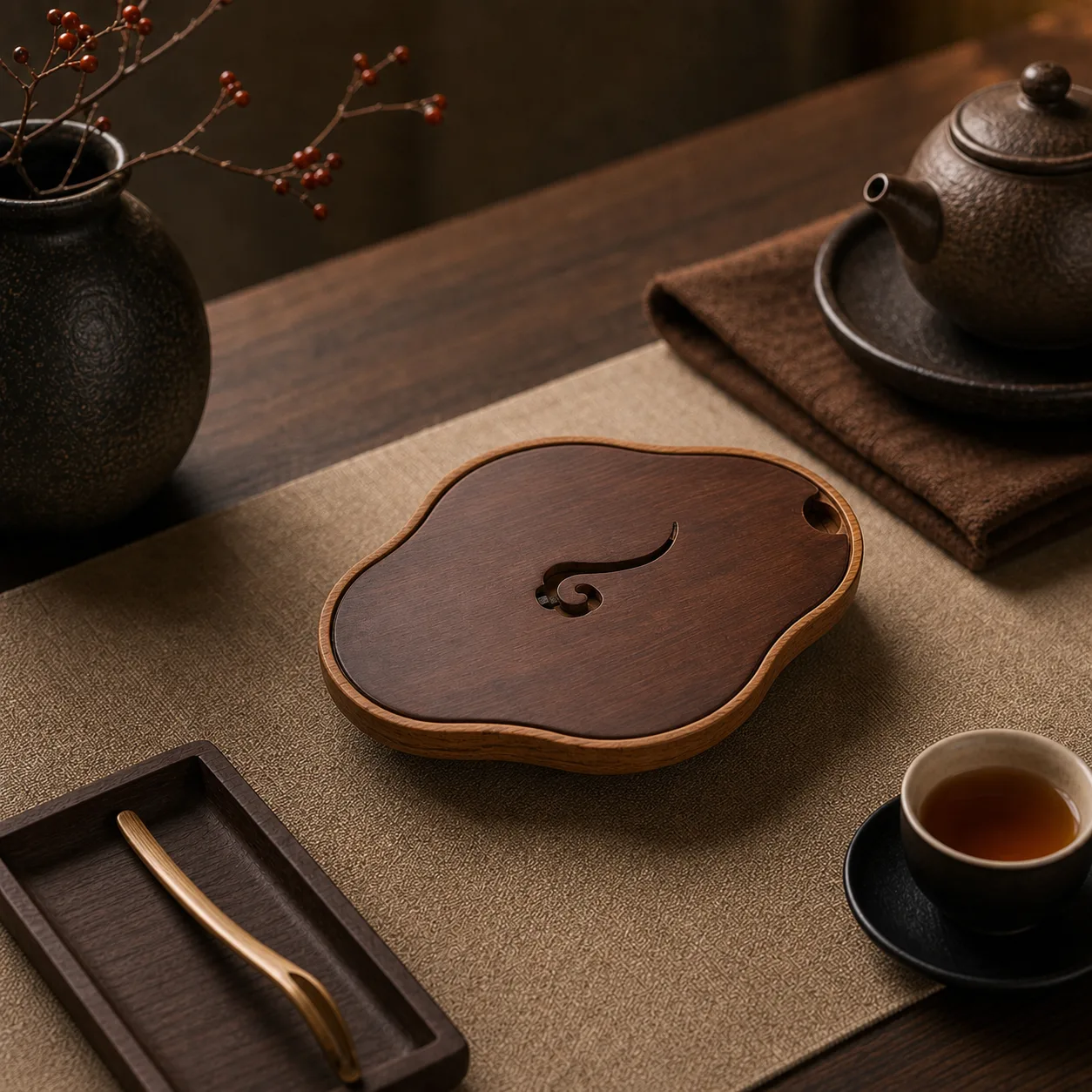
A gongfu tea table is used every day. It holds hot water, absorbs spills, supports the weight of teaware, and accumulates the residue of hundreds of sessions. How you care for it determines how long it lasts and how good it continues to look.
This guide covers the daily habits and longer-term maintenance practices that keep a tea table — and the objects on it — in good condition for years.
After Every Session
The most important care happens immediately after you finish brewing.
Wipe the tray surface with a clean, dry tea cloth. Remove any standing water, tea residue, or drips from the teapot base. On a lacquered surface, water left to sit will eventually dull the finish. On wood, it can cause swelling or staining over time.
Rinse the tea cloth itself and hang it to dry. A damp cloth left folded will develop odors and transfer them to the tray on the next use.
Empty and rinse the tea waste bowl. This is the object that accumulates the most residue — spent water, warming rinses, discarded first steeps. A quick rinse after each session prevents buildup that becomes difficult to remove later.
Weekly Care
Once a week, or whenever the tray begins to look dull, give it a more thorough clean.
For lacquered surfaces: wipe with a soft cloth lightly dampened with clean water. Do not use soap unless there is a specific stain that requires it — and if you do, use the mildest possible detergent and rinse thoroughly. Dry immediately with a clean cloth.
For wooden surfaces: the same approach applies. Avoid soaking the wood. If the surface feels dry or rough, a very small amount of food-safe mineral oil applied with a cloth and buffed off will restore the surface without leaving residue.
Check the tea cloth. If it has developed any stiffness or odor, wash it properly — cool water, mild soap, hang to dry.
Caring for Lacquerware Specifically
Lacquered objects — trays, waste bowls, teapot rests, cup coasters — require a few specific precautions.
Avoid placing very hot objects directly on lacquer. A teapot that has just been filled with boiling water will transfer heat to the surface. Over time, repeated heat exposure can cause the lacquer to crack or lift. Use a teapot rest to create a buffer.
Avoid prolonged exposure to direct sunlight. UV light causes lacquer to fade and can make the surface brittle. If your tea table is near a window, consider moving it or using a cloth to cover the tray when not in use.
Do not use abrasive cleaners or rough cloths. Lacquer scratches more easily than it appears. Always use soft cotton or linen cloths.
The patina that develops on a well-used lacquer piece — a subtle deepening of color and a slight softening of the surface sheen — is not damage. It is the natural result of use and handling, and it makes the piece more personal over time. Do not try to polish it away.
Seasonal and Long-Term Care
A few times a year, take everything off the table and clean each object individually. This is also a good opportunity to notice whether anything needs attention — a chip in the lacquer, a crack in a cup, a tea cloth that has worn thin.
Store teaware in a dry place when not in use for extended periods. Humidity causes mold on organic materials and can affect lacquer adhesion over time.
If a lacquered piece develops a small chip or crack, do not attempt to repair it with household adhesives or paint. Traditional lacquer repair requires the same materials and conditions as the original application. A specialist can restore a damaged piece properly; an amateur repair will usually make it worse.
The Reward of Regular Care
A tea table that is cared for consistently does not require much effort at any one time. The daily wipe, the weekly clean, the occasional inspection — these are small habits that compound over years into a table that looks and feels better the longer it is used.
The objects on the table — the lacquered tray, the waste bowl, the cup coasters — are made to be used. Regular care is not a burden on them. It is part of what they are for.
Explore the lacquered tea trays and objects in MR.TEA Lacquered Tea Objects — made for daily use and designed to last.